• Início
  • Who We Are
  • Atlas
  • Dictionary
  • Videos
  • Innovation
  • Blogue
  • Contacts
  • English
    • Portuguese (Portugal)
    • French
    • Spanish
  • Home
  • About
  • Atlas
    • Dictionary
  • Videos
  • Blog
  • Innovation
  • Contacts
  • English
    • Portuguese (Portugal)
    • French
    • Spanish
CHORIORETINAL INFLAMMATORY DISEASES - NonInfectious Causes

SERPIGINOUS CHOROIDITIS

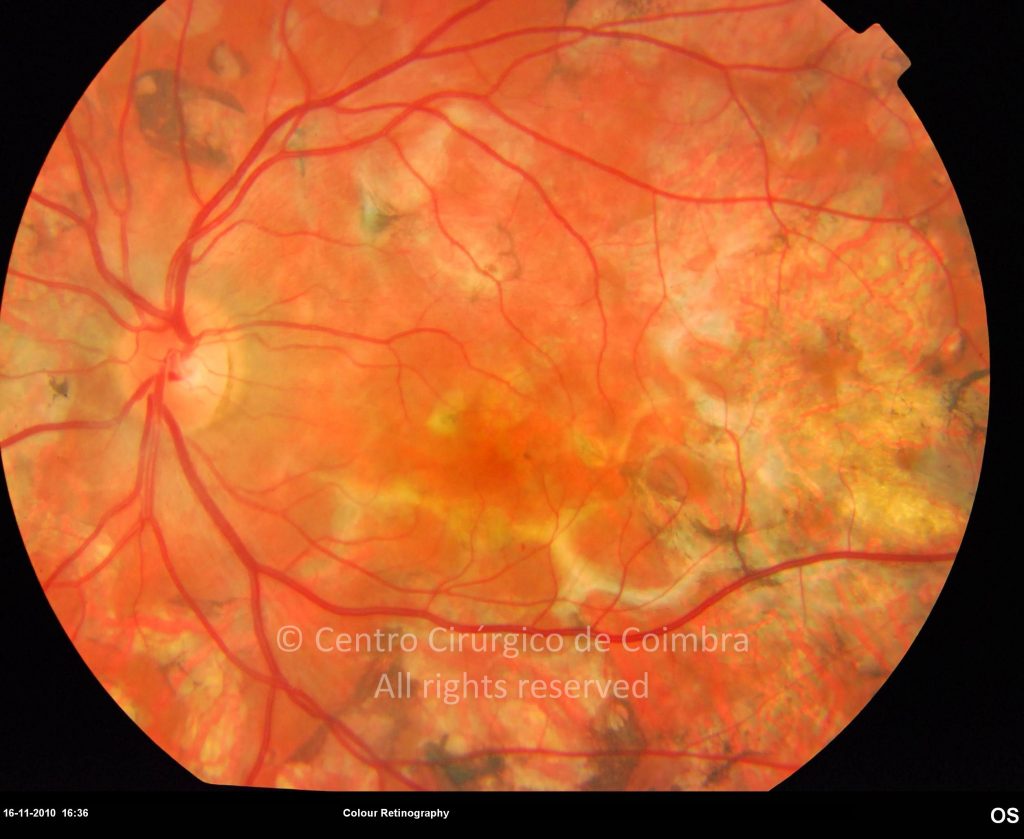
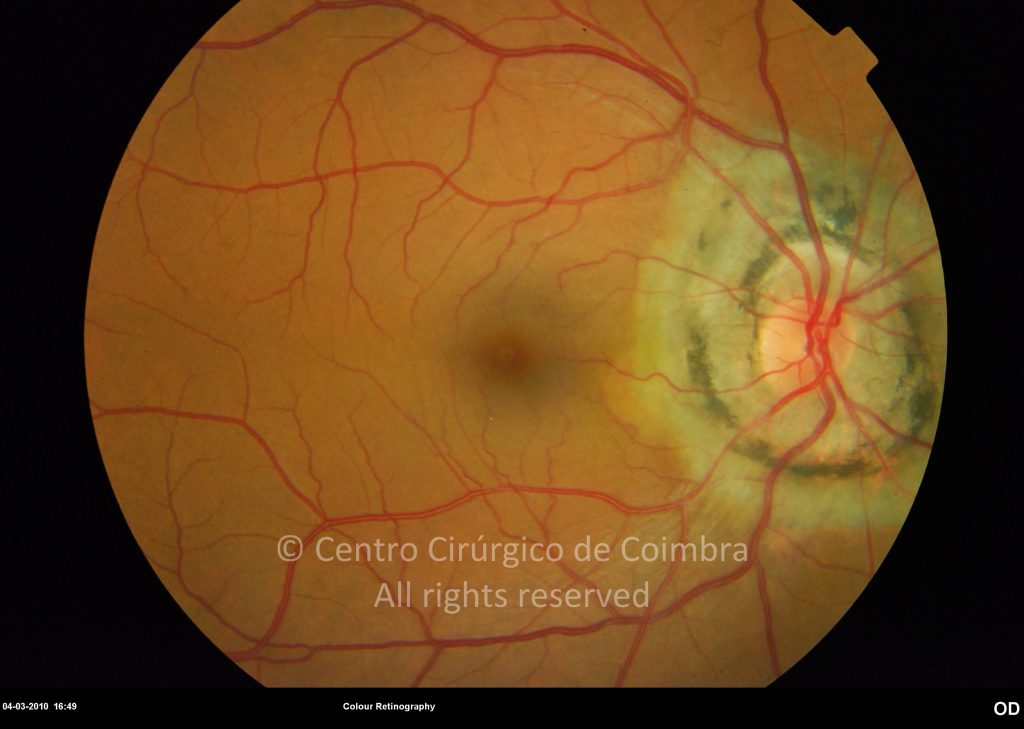
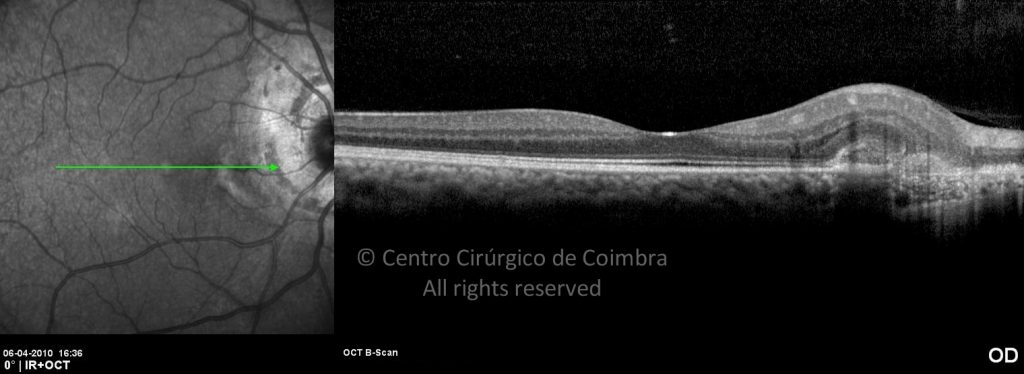
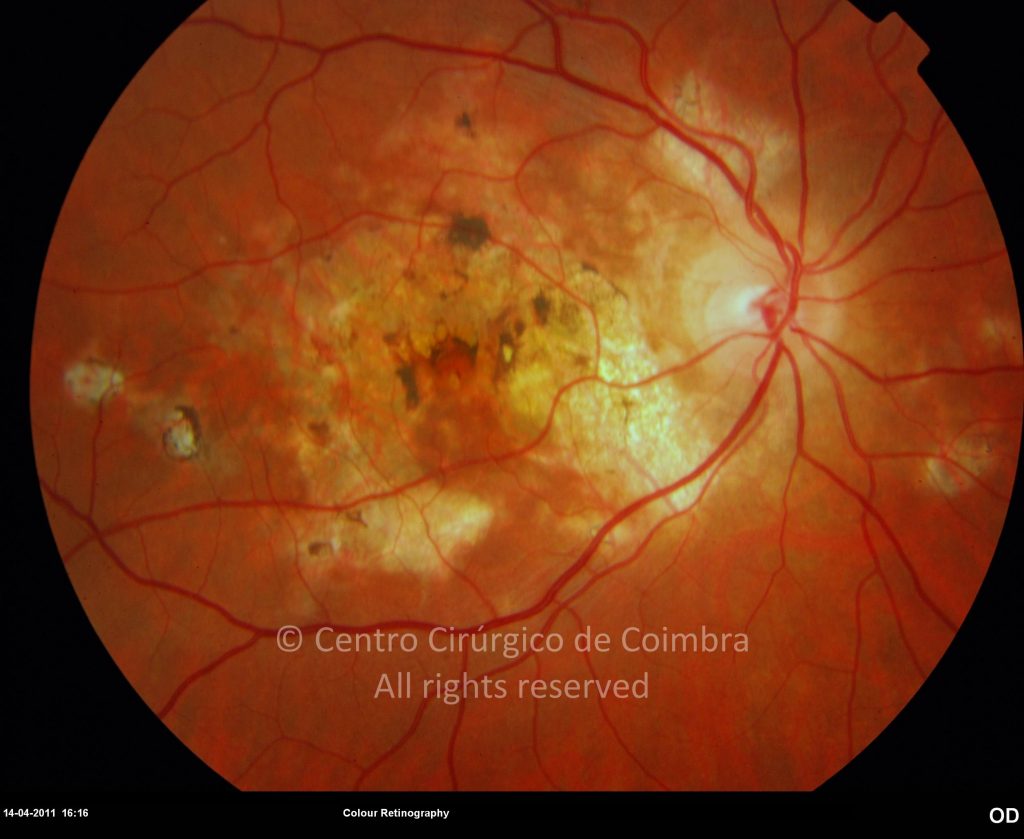
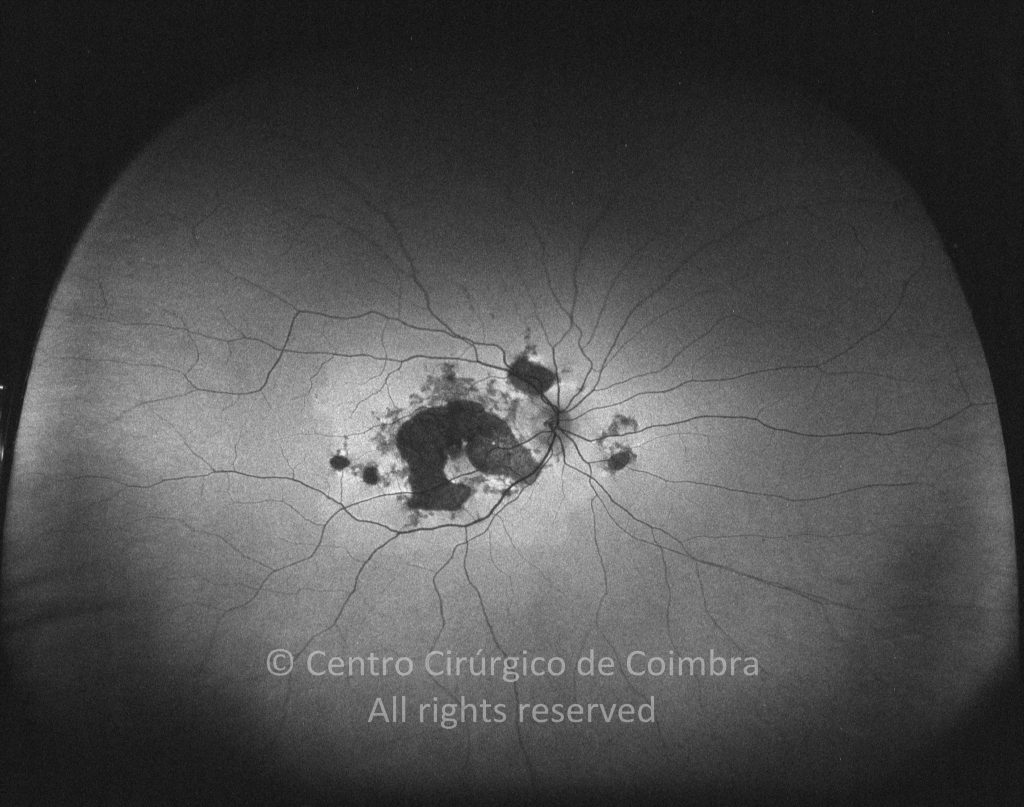
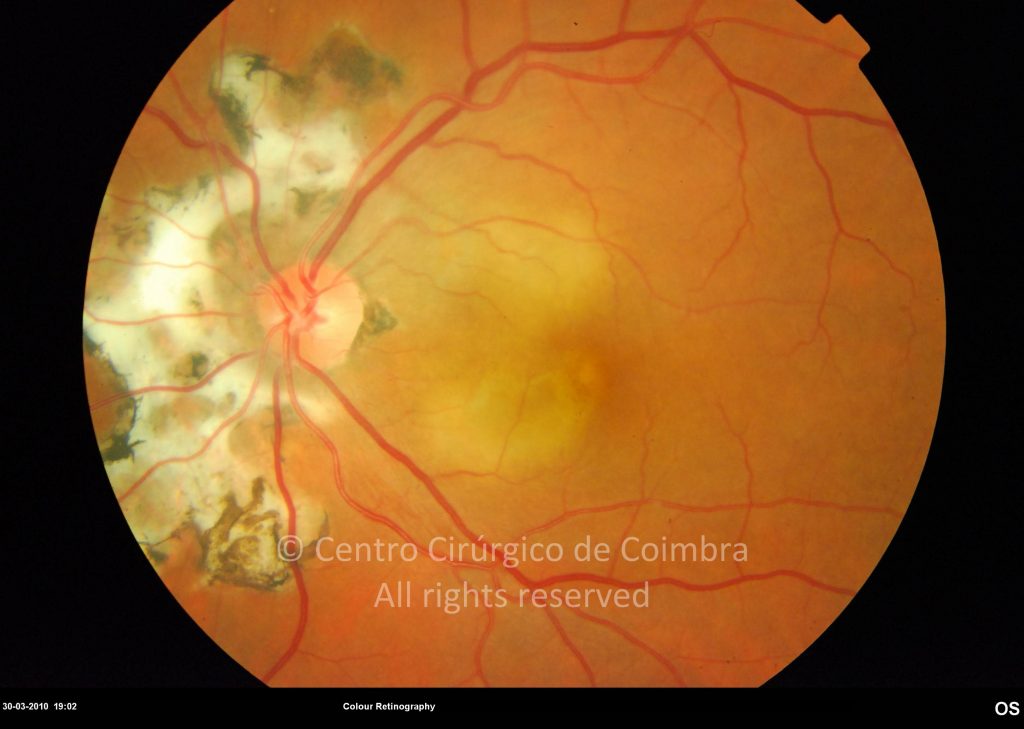
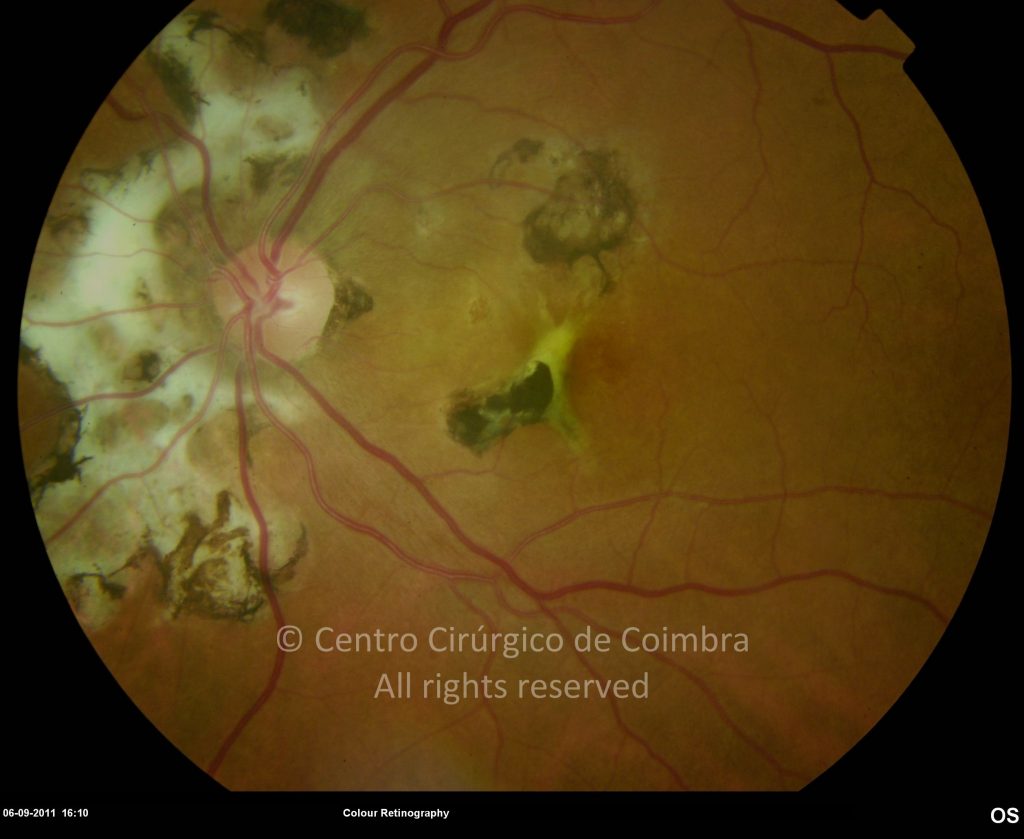
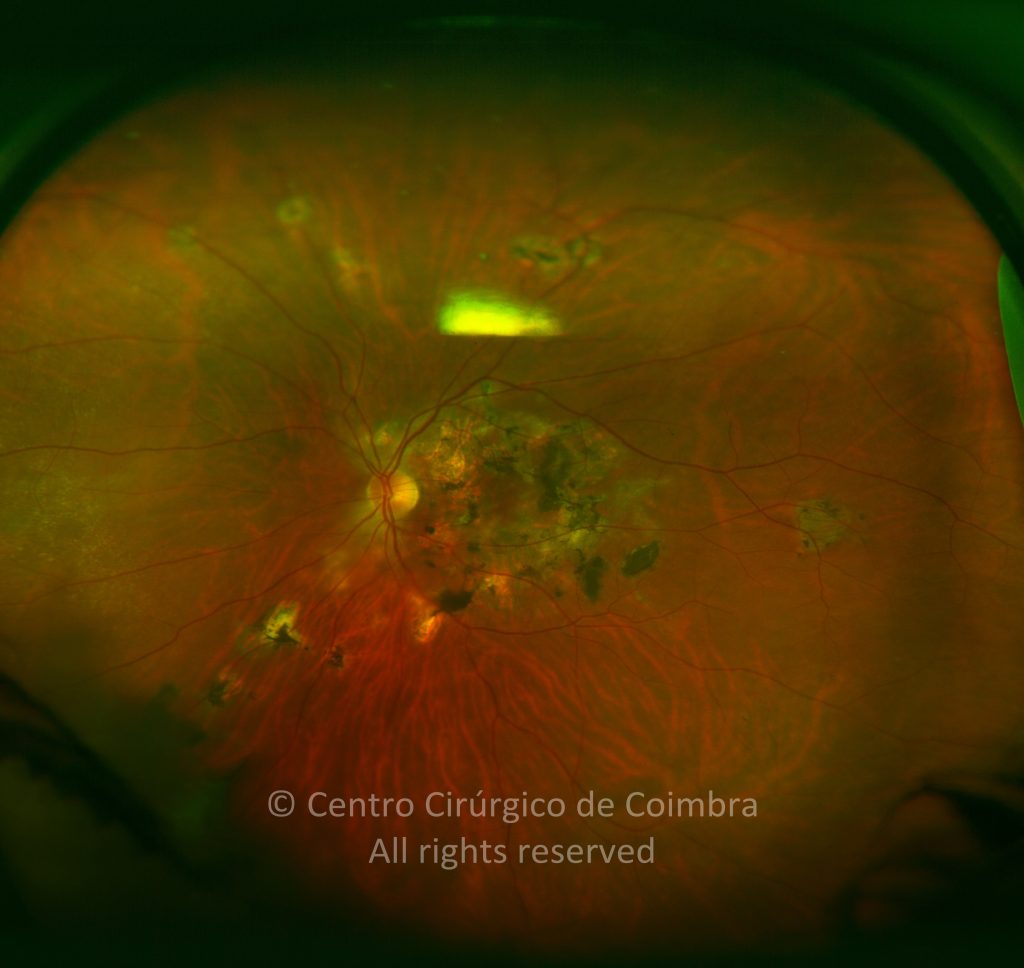
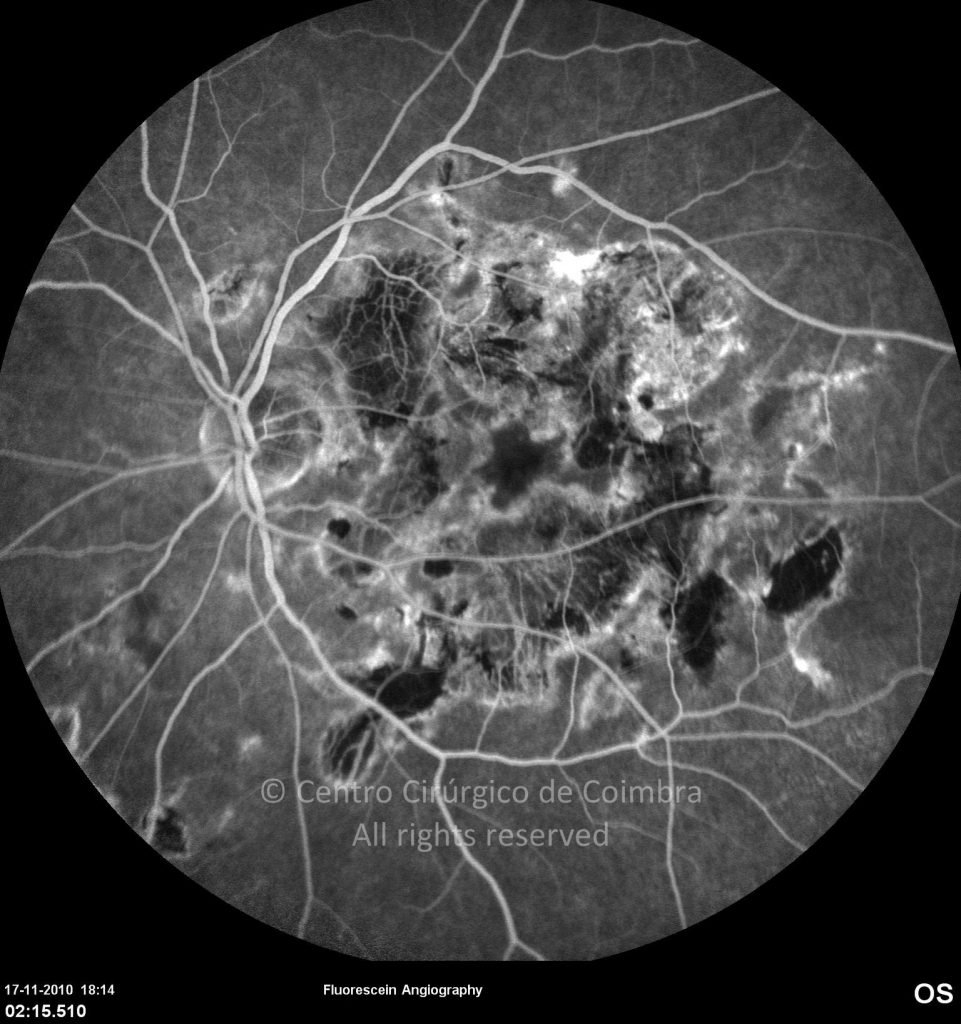
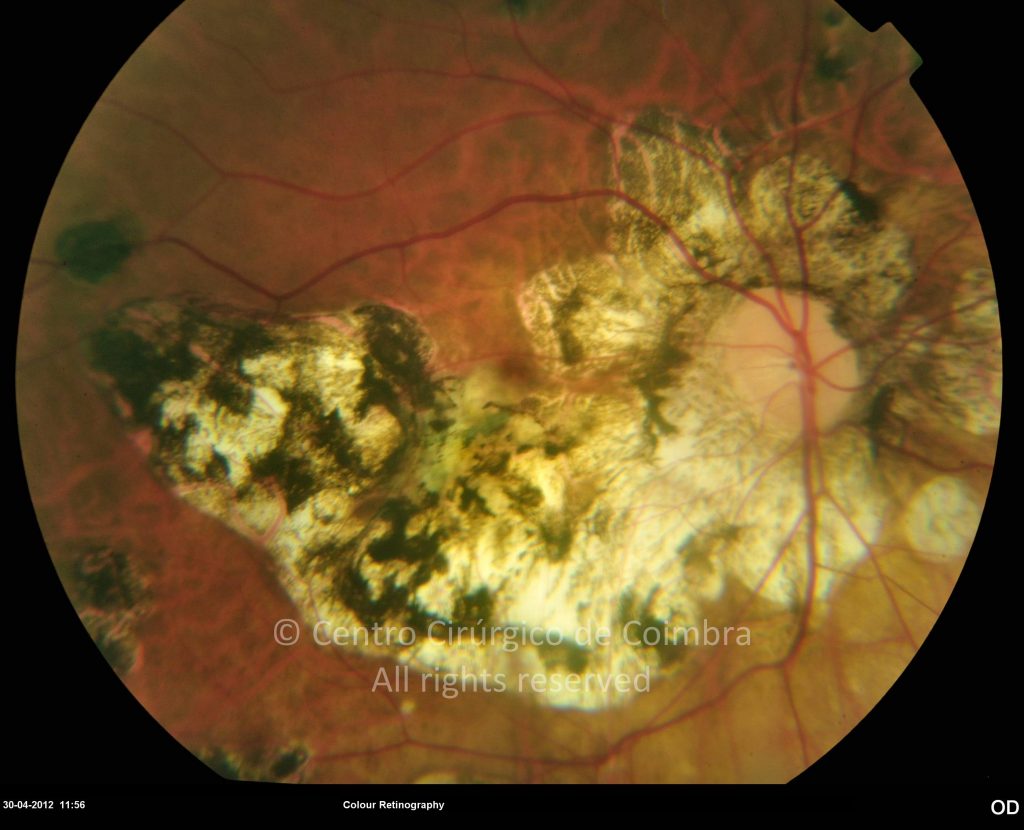
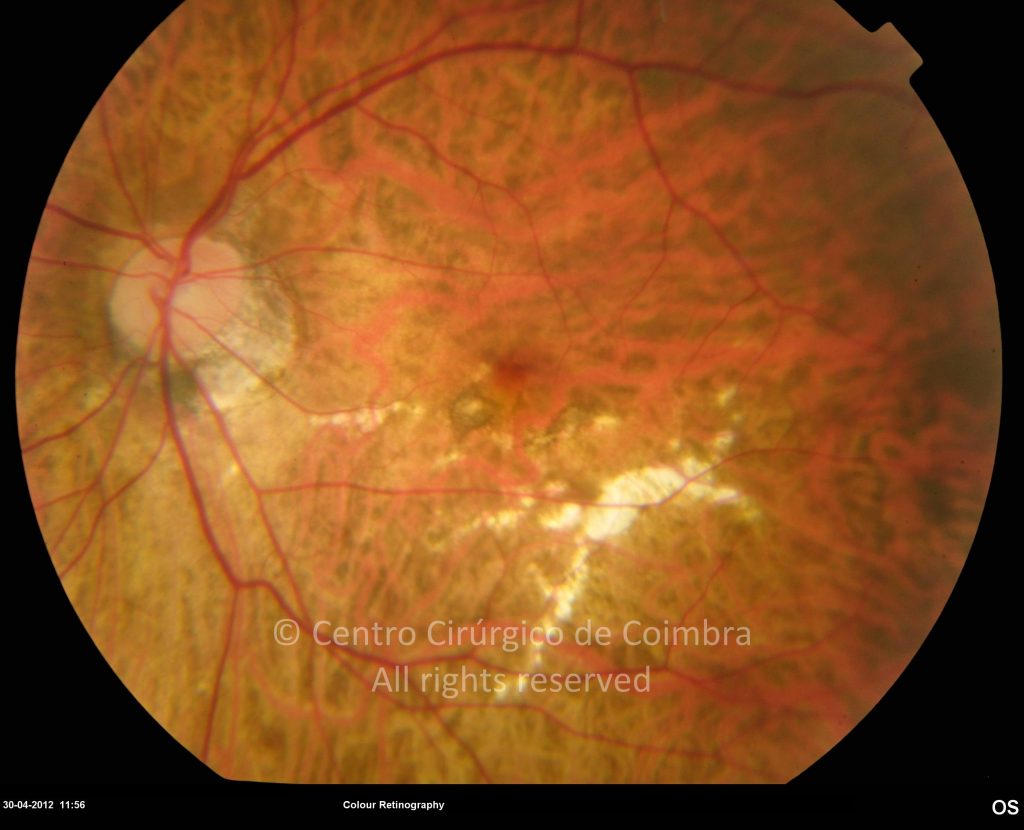
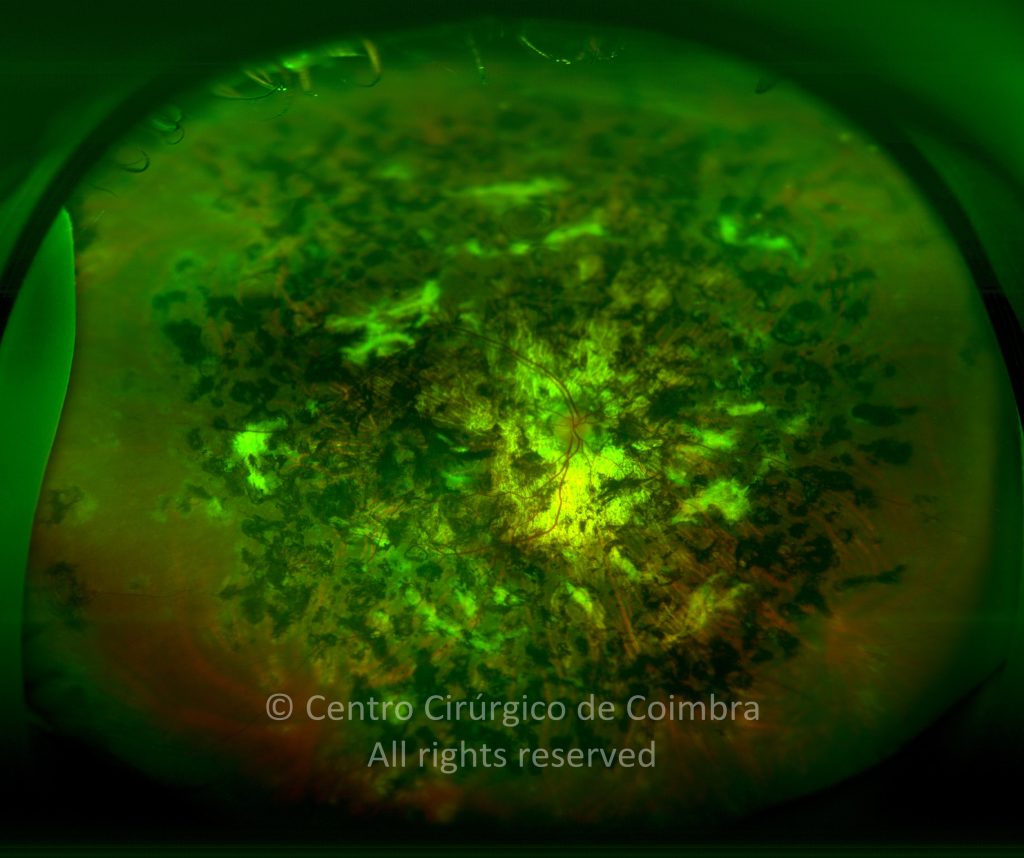
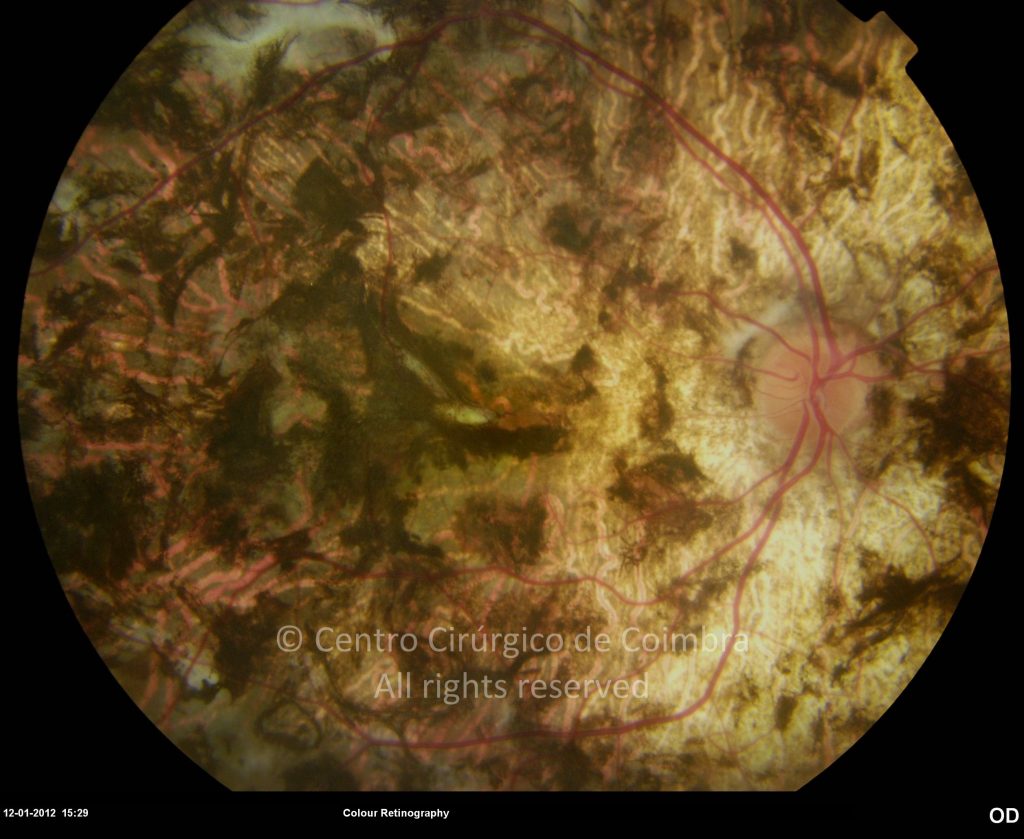
Serpiginous choroiditis is a bilateral inflammatory disease of unknown cause that represents a pathologic affliction of the retinal pigment epithelium, choriocapillaris, and inner choroid. There is a disruption of the overlying neurosensory retina, marked by periods of activity with intervening intervals of quiescence.


It typically occurs in young to middle-aged white people.


Acute lesions have a gray-white or yellow appearance that begin around the optic nerve or the posterior pole and advance centrifugally by recurrences, to the midperiphery, in an irregular serpentine fashion, leading to scarring and choroidal atrophy. They may result in choroidal neovascular membrane in as many 25% of patients. Given the unpredictability of the disease progression, the fovea is never truly safe from eventual involvement.


Differential Diagnosis

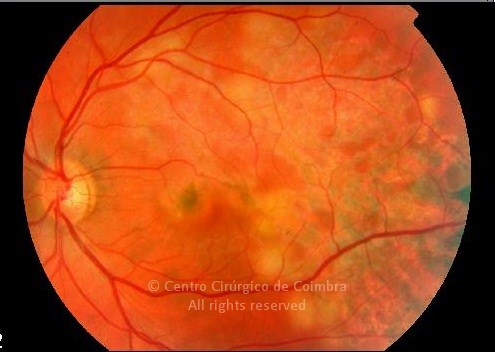
Acute posterior multifocal placoid pigment epitheliopathy
0
Clinical Cases

Infectious disorders

  • Presumed ocular histoplasmosis syndrome
  • Syphilis
  • Toxoplasmosis
  • Tuberculosis

Inflammatory diseases

  • Multifocal Choroiditis
  • Posterior scleritis
  • Sarcoidosis

Degenerative/dystrophic disorders

  • Best disease
  • Central areolar choroidal dystrophy
  • Fundus flavimaculatus
  • Sorsby´s pseudo-inflammatory dystrophy

Infiltrative diseases of the choroid

  • Choroidal osteoma
  • Metastatic tumor
  • Non-Hodgkin’s lymphoma (reticulum cell sarcoma)

Choroidal neovascularization

  • Age-related macular degeneration
  • Angioid streaks
  • Drusen of optic nerve head
  • Idiopathic choroidal neovascularization
  • Degenerative Myopia
  • Peripapillary subretinal neovascularization

Clinical Cases

Clinical Case 1

  • o01-ti02-12622-20060308-081 (1)
  • o02-ti02-12622-20101116-002 (1)

3

56

0

Clinical Case 2

  • o01-ti02-132073-20100304-001 (1)
  • o02-ti03-132073-20100406-027 (1)

11

394

0

Clinical Case 3

  • o01-ti02-7154-20110414-001
  • o02-ti02-7154-20120329-994

2

32

0

Clinical Case 4

  • o01-ti02-16224-20100330-001
  • o02-ti02-16224-20110906-002

6

84

0

Clinical Case 5

  • o01-ti02-2142375-20101117-999
  • o02-ti07-2142375-20101117-005

2

35

0

Clinical Case 6

  • o01-ti02-2158353-20120430-001
  • o02-ti02-2158353-20120430-002

2

35

0

Clinical Case 7

  • o01-ti02-2154980-20120112-997
  • o02-ti02-2154980-20120112-001

3

43

0


  • Centro Cirúrgico De Coimbra

    Rua Dr. Manuel Campos Pinheiro, 51
    Espadaneira - S. Martinho do Bispo
    3045-089 Coimbra, Portugal

    Coordenadas: 40°12'35.5"N 8°27'59.7"W

    Tel.: +351 239 802 700
    (Chamada para rede fixa nacional)

    Email: centrocirurgico@ccci.pt / atlasrleye@ccci.pt

    Web: www.ccci.pt

  • Informações Legais

    INTERCIR – Centro Cirúrgico de Coimbra, S.A.

    NIPC 503 834 971 | Registo ERS E106499

    Licenças de Funcionamento: UPS n.º 3/2010 (aditamento à Licença de Funcionamento UPS 07/02.00) e Licença n.º 9072/2015.

    Entidade prestadora de cuidados de saúde registada e licenciada pela Entidade Reguladora da Saúde (ERS) ERS E106499.

  • Política de Privacidade

    Política de Cookies


Centro Cirúrgico de Coimbra. Todos os direitos reservados.